


Most of the mildew on garden cushions doesn’t start in the garden at all. It grows in the shed, over the winter, on fabric that went into storage slightly damp and slightly dirty at the end of a wet October. The furniture gets a clean before it’s put away, the cushions get stacked on top of it, and in April the first warm weekend starts with a grey bloom on the seat pads and a smell that won’t shift. A couple of hours spent on the fabrics now, on a dry day, prevents most of it.
Wait for a dry spell
Outdoor fabrics need to be properly dry before they go anywhere enclosed, and in autumn that usually means waiting for two or three dry days in a row rather than grabbing the first free Saturday. Bring cushions under cover as soon as the forecast turns, even if you’re not ready to clean them yet, and leave them in a porch, a garage or a spare room with air moving around them.
Brush, then wash what will wash
Start by brushing off everything loose: dry leaves, dead flower heads, cobwebs from under the seat, the grit that collects in piping and seams. A stiff brush does more than a damp cloth at this stage, because wet soil smears into the weave.
Then check the labels. Many removable cushion covers can go in the washing machine on a cool, gentle cycle, and should be put back on the pads only when both are bone dry. Shower-proof or coated fabrics are usually better cleaned by hand with mild soapy water and a soft brush, then rinsed with a hose and left to dry in the air.
The fabrics that can’t go in the machine
That leaves the awkward pieces: seat pads with covers sewn on, the canvas of a hammock and the cushion that’s too thick for the drum. These are the ones that usually come out of winter storage looking the worst, because all they ever get is a quick wipe.
A steamer helps here. Held a short distance from the fabric and moved slowly, it gets heat into seams and piping without soaking the filling, which is where musty smells tend to start. A garment steamer or a handheld steam purifier will do it, and the Laurastar range covers both kinds, from handheld steamers to purifiers made for upholstery. Test a hidden corner first, especially on coloured or coated fabric, and let everything dry fully in the air before it’s packed away. Thick seat pads can take a full day to dry right through, so turn them over halfway and squeeze a corner to check the foam inside isn’t still cool and damp.
Don’t forget your gardening clothes
The same goes for the things you wear in the garden. A waxed or waterproof jacket hung up muddy in the shed all winter will smell of the shed by spring, and gardening gloves left balled up in a trug can go mouldy. Brush the mud off once it’s dried, wash what the label allows and hang everything indoors or in a dry outbuilding.
Steam will also freshen a fleece or a cotton work shirt that doesn’t need a full wash. Hang it outside for an hour afterwards if the weather allows.
Store them so air can move
The RHS advice for October is to store garden furniture in a garage or shed if you can, to keep it dry and make it last longer. The same reasoning applies to everything soft that sits on it, and a dry shed with a sound roof is the best place for cushions too.
A breathable cotton bag or an old duvet cover is better than a sealed plastic sack, which traps any moisture that’s left and turns it into condensation. Stand cushions on their edges on a shelf or a pallet rather than flat on a concrete floor, and keep them away from the shed walls, where damp tends to gather.
Keep them well away from bird seed and compost bags too, which draw in mice.
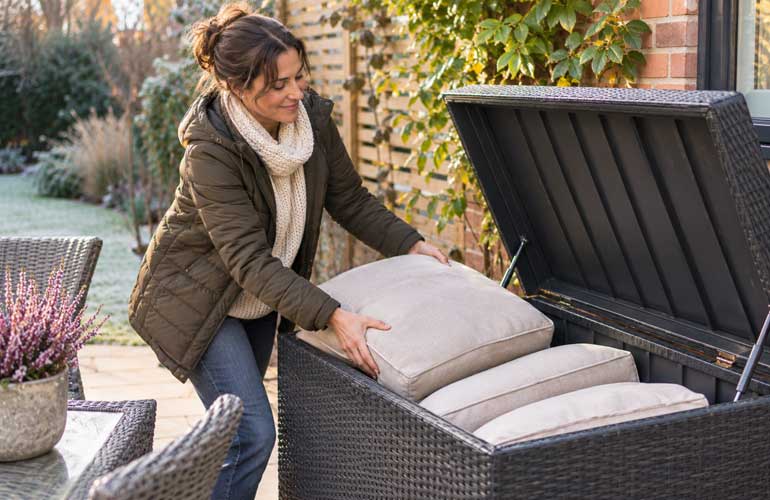
If your storage is a deck box, open it on dry days through the winter for an hour or so, and drop a moisture absorber inside. Check on things once or twice before spring, too, and deal with any small patch of mildew as soon as you see it, while it’s still on the surface of the fabric.
Ready for the first warm weekend
When the first warm weekend comes round in April or May, bring the cushions out a day or two before you want to use them. If anything has picked up a musty smell over the winter, give it a day in the sunshine and a quick steam before it goes back on the chairs. While the covers are off, check the furniture underneath too, as a loose slat or rusty bolt is easier to fix before summer gets going. Wipe the frames down as well, so the clean covers don’t go straight back onto a dusty seat.


