


Discussing sun-loving succulents is one of my favourite gardening topics. You can probably already tell this as I’ve got lots of posts about succulents, cacti and how to care for them. I’ve researched, grown and experimented with countless succulent plants, and over time, I’ve come to understand exactly which ones crave bright light and full sun, and how to protect them through the summer months and the hot summers, so if you’ve arrived here after searching ‘what succulents like full sun’, you are in the right place.
What Succulents Like Full Sun?
I’ve got some great advice about which succulent species are truly sun-loving, how to gradually harden young or new plants and an armful of tips on soil, watering and container gardening. If you’ve got any other tips or knowledge you’d like to share with me, I’d love to hear them. You can always drop me a line via my email or via my social media channels. It’s always great to hear from a fellow plant lover.
Bright Light, Full Sun, and Partial Shade
Succulents, by their very nature, evolved in arid or semi-arid places. Many come from rocky slopes, deserts, or semi-desert zones where intense sunlight is the norm. Their fleshy leaves, water storage tissues and wax coatings equip them to handle low water, harsh sunlight, and heat.
However, you will find that not all succulents are identical. Some prefer partial shade or bright indirect light. Varieties like Haworthia and some indoor succulents prefer shade, and when they are thrust into direct sunlight, they risk sunburn, leaf browning as a result of stress. So it’s important to do your research first and work out what plants will thrive in full sunlight and what succulent varieties need a bit more shade.
You’ll also want to know about the climate you live in. Is it warm all year round, or do you get cold winters, which might be too harsh for some sun-loving varieties? Being aware of your local climate is one of the most important points when you are planning out any garden with plants, whether they are succulents or not.
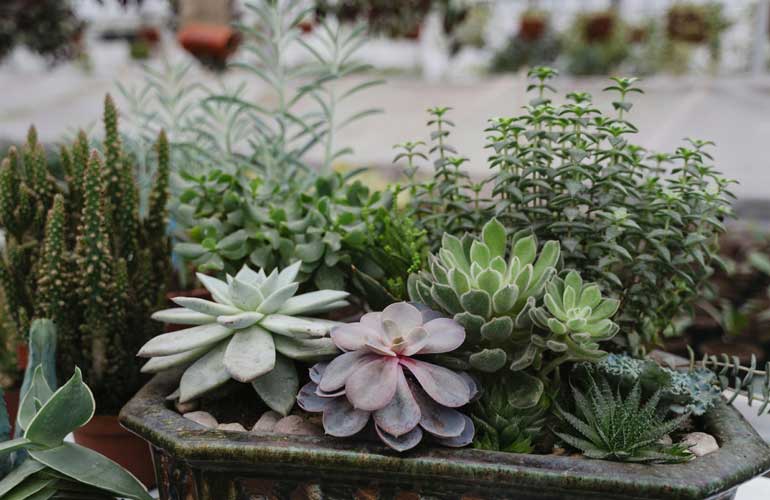
Bright light or high light succulents are your go-to for full sun gardens. They need at least 4–6 hours of direct sun daily and often more.
Partial shade or shade-tolerant succulents prefer filtered light, morning sun and protection during the strong afternoon sun.
Extreme heat combined with intense sunlight can mean that even sun-loving succulents can struggle under blazing mid-day sun in hot climates. You’ll find that’s where acclimation and occasional shade cloth or dappled shelter come in.
Did you know that succulents that don’t get enough light can stretch? Their stems lengthen and leaf spacing increases, and this is a sure sign they’re desperate for a bit more sun. Ensuring the right light conditions will help keep your plants compact, vibrant, and healthy.
Which Succulents Like Full Sun?
Now, the fun part – picking plants that really want to bask in sunshine. Based on both cultivation guides and my own hands-on experience, here are some of the best options for what succulents like full sun.
Full-Sun Succulents
Echeveria (e.g. Echeveria agavoides, Echeveria chihuahuaensis)
These rosette succulents are classic favourites. You’ll find that many varieties thrive under full sunlight and develop gorgeous, vibrant colours (reds, pinks, purples) when stressed just a bit by sun and dryness.
My top tip: Gradually increase exposure so the leaves of your succulent don’t fry when moved outdoors.
Crassula (e.g. Crassula ovata, others)
The jade plant (Crassula ovata) is a truly popular plant that often tolerates bright, sunny spots. You’ll also find that some hybrids and varieties enjoy full sun too.
My top tip: In intense heat, leaf margins may scorch; midday shade can help.
Aloe
I love aloe vera, and these do splendidly under unpredictable sunshine, especially in drier climates. They need enough sun to stay compact; otherwise, they can get lanky.
Agave
These tough full sun succulents can handle blazing conditions, especially desert varieties. I have a whole dedicated post about how often to water agave, which is well worth a read if you are planting agave.
Prickly Pear Cactus (Opuntia, etc.)
A quintessential sun-loving succulent (or cactus!) thrives with long exposure, handles high temperatures, and is a good choice for full-sun gardens.
Golden Barrel Cactus (Echinocactus grusonii)
You’ll find that this is one of the hardiest plants for bright sun and heat. It’s a staple in harsh, arid gardens.
Portulacaria afra (Elephant Bush, sometimes called dwarf jade)
This lovely succulent can tolerate full sun and is often used as ground cover or in container gardens. It’s also known to survive very high temperatures when mature.
Kalanchoe tomentosa (Panda Plant)
You’ll find this fuzzy-leaved plant does surprisingly well in harsh sun. Although in extreme heat, there may be a bit of leaf tip damage.
Thick-leaved Sedum (e.g. Sedum adolphi)
I find these are great ground cover or rock garden succulents. They like full sun and can tolerate intense sun with little water.
Euphorbia tirucalli (Pencil/Fire Sticks)
Euphorbias are another option as a sun-loving succulent. They can tolerate full sun exposure. Although care is needed with sap and handling.
You’ll find that even among sun-loving succulents, there are degrees of tolerance. Some handle long periods in blazing heat, others do better with shelter during the hottest part of the day.
How to Get Sun-Loving Succulents to Thrive
It’s one thing to pick sun-loving species; it’s another to help them flourish. Here’s my hands-on step-by-step guidance, drawn from both experience and horticultural sources.

Start with well-drained soil.
No succulent ever loved to sit in water. Even if you have a full sun garden, poor drainage will kill them faster than lack of light.
I’d suggest using a gritty cactus or succulent mix, or amending your soil with perlite, pumice, coarse sand, or grit. You can use a 1:1 mix of potting soil plus grit.
Make sure pots or garden beds drain freely. Excess water should escape quickly, avoiding moist soil conditions. In beds, it’s a good idea to raise mounds or ridges so roots aren’t sitting lower than the surrounding soil.
Hardening Off
If you’ve acquired plants from a nursery which are likely to have been grown under shade or filtered conditions, don’t just plunge them into blazing sun and hope for the best.
I’d suggest beginning with 30 minutes of sun, then add an hour or two each day over several days. Provide light afternoon shade until they show sturdiness. You’ll want to keep an eye on their leaf tips. Burnt or bleached leaves will tell you that they’ve had too much sun too soon.
Watering
Even full sun succulents need water, but really only when the conditions are right. I suggest using a wet-dry cycle, which is where you water thoroughly so the root zone is saturated, allow complete drainage, and then wait until the soil is completely dry before watering again.
During very hot days, succulents in full sun may need slightly more frequent watering to keep them from shrivelling or stressing. But beware not to overdo it. I’d suggest always checking soil dryness several inches down before watering again. If it’s even slightly damp, hold off
Manage Extreme Heat
Sunburn is real for succulents, and white, tan, or brown patches on leaves are irreversible. Even sun lovers can get burned under intense sunlight combined with high temperatures.
It’s rare here in the UK, but if day temps get extremely high, > 35°C (95°F) or more, consider using shade cloth, dappled shade, or even moving container plants temporarily.
You could also provide air circulation, as heat stays higher in stagnant air. It’s important you don’t water during the midday sun in heat waves. This will prevent leaf scorch. I’d suggest watering early morning or late afternoon. You can also rotate your plants so the sides don’t get the sun unevenly.
Design & Placement
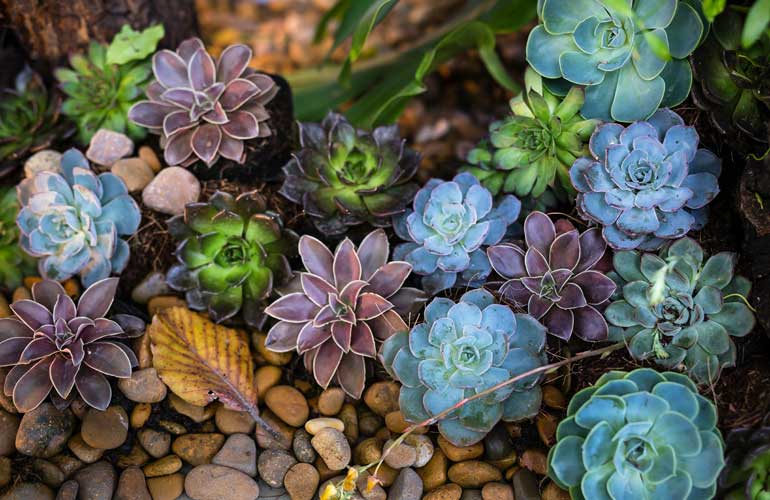
You can use rock gardens, gravel mulches, or stone accents to increase reflectivity and heat retention. Although many sun succulents enjoy that extra sun.
You could cleverly combine sun-loving succulents in container gardens with matching water and light tolerances. This makes it easier to maintain and care for your succulents.
You can also use ground cover succulents, like Sedum, Portulacaria, or creeping varieties in open areas for a low-maintenance bed.
I’d suggest in a mixed bed that you place your sun lovers in the brightest spots and reserve shaded edges for shade-tolerant species.
Seasons
In cooler climates or regions with cold winters, you’ll want to make sure that your sun succulents are either sheltered or moved indoors during frost. Many full sun succulents are not cold hardy. You’ll also find that during the winter or dormant months, succulents generally don’t need watering, and they should be largely kept dry.
Design Ideas
Because I love design nearly as much as plants, here are some layout ideas you can use.
Rock Gardens
I combine sun-loving succulents with rocks, gravel, and stone mulch. The rocks help retain heat and reflect light, creating a microclimate many succulents absolutely love.
Container Gardens
I group succulents with similar light, water, and heat tolerances together. In planters, you’ll find that drainage is critical.
Ground Cover Succulents
I use creeping Sedum, Portulacaria afra, or low rosette species to fill gaps, suppress weeds, and create uniform mats in sunny spots.
Accent Focal Points
You could plant a golden barrel cactus or agave as centrepieces with lower succulents surrounding it. It would look quite stunning.
Light Zones
Design transitions from full sun to partial shade by placing succulents in gradient zones. Put the brightest plants deepest in sun spots and the more shade-tolerant at edges.
Troubleshooting
Even a garden specialist or a self-appointed succulent expert faces mistakes. Here are common problems and how to deal with them.
Sunburn/leaf damage
This is caused by sudden exposure, especially in intense sunlight. The solution is to shade, use slower acclimation and possibly even move plants temporarily.
Etiolation (stretching)
This is when plants don’t get enough light. The solution is to move your succulent to a brighter location to increase the amount of sun, and you should also rotate your succulent.
Overwatering or root rot
You’ll find that even in the sun, wet soil kills succulents faster than drought. You should stick to the wet-dry cycle that I outlined above and make sure your succulent has good drainage.
Leaf drop or softness
This is often caused by stress. Usually caused by a sudden change, too much heat, or shock. You’ll want to shade your succulent temporarily. I’d also back off watering for a bit and allow your plant to recover.
Cold damage in winter
It’s hard as many sun-loving succulents are not frost-hardy. So if you live in an area which gets cold over the winter, you’ll want to bring your succulents indoors or provide frost protection. If this isn’t going to be possible, you will want to ensure that you have chosen hardy varieties for your succulent garden.
Uneven colouration or sun stress
Sometimes parts of a plant get more sun, leading to bleaching. There is a simple solution to this. You can just rotate your plants or even just adjust their placement. Perhaps partial shade might be better for some of your plants?
Let me leave you with what I’ve learned. The sun doesn’t scare succulents. The best succulents for full sun are those with natural resilience to thrive in bright light, high temperatures, and little water. If you choose your plants carefully when you are planning out your succulent garden, your plants should enjoy a full sun spot. Sometimes there is a little bit of trial and error when it comes to your garden design and placement of succulents.
Perhaps have a sunny spot in mind, but also somewhere that gets some shade from the midday sun so that you can move your plants if they are showing signs of distress in their initial location.
If you’re a succulent lover starting fresh, begin with hardy picks (Echeveria, Crassula, Sedum, Aloe) and gradually add more dramatic ones (Barrel cactus, Agave). As you the experience with what variety likes what level of sun, you can add rarer species.
Over time, you’ll learn your own microclimate’s quirks and which plants like that specific spot. You’ll soon see which spots burn, which stay cooler, and how your soil drains and that way you can tailor your plant selection accordingly.
My top tip is important. I would take some photos along the way. Especially during heatwaves or during very hot spells of the summer. That way, you’ll be able to pinpoint which varieties did well during the hot heat and which didn’t quite like it. Because year after year may all start to blur into one after a few years, and you might be moving plants from one location to the next, just to move them back.
Succulents can be a wonderful addition to the garden, and if you get them right, they are generally quite low-maintenance. You don’t need to water them too much, and they will thrive under the right conditions. It may take a few rounds of working out what succulents do better in your sunny spots and what needs a bit more shade. If you have a sunny garden, don’t be afraid to try out some of the sun-loving varieties.
Other posts to read –
Succulent Garden Ideas For Small Spaces
If you think your garden isn’t suitable for succulents that need full sun, why not take a look at my succulent glass bowl ideas? You will be able to still be a successful parent, but do it from the comfort of your own home, without worrying about whether your plants are getting enough sun in the garden.


