

You’ll find that keeping mulch beds clean and free of fallen leaves is an essential part of garden maintenance. Fallen leaves in flower beds can actually lead to a number of problems, including suffocating plant roots to encouraging garden pests. So, whether you’re dealing with whole leaves, shredded leaves, or simply just wet leaves, you’ll find that using the best way to remove them efficiently can save so much time. The good news is that I’ve pulled together some of the best ways to help you solve the problem ‘How to get leaves out of mulch. These techniques are the easiest way to keep your mulch, and therefore your garden, healthy – in less time. I’ve also got some tips around leaf mulch, grass clippings and lots of other ways you can look after your garden. You can also read my posts about grass mulching benefits and why does mulch smell?
How to Get Leaves Out of Mulch
Why Removing Leaves from Mulch is Important
You may think that leaves seem harmless, but when left in large amounts, they can hurt your mulch bed. Here are some issues that may occur if you don’t keep your mulch free from leaves.
Moisture Retention & Lawn Diseases
You’ll find that wet, soggy leaves can trap excessive moisture, leading to fungal growth. This can cause all kinds of diseases in your plants.
Compacted Leaf Litter
It’s a problem! A thick layer of leaves will prevent oxygen and water from reaching plant roots. This is going to reduce the effectiveness of your mulch.
Pest and Weed Control
You’ll find that an excessive amount of leaves will create a hiding place for insects and rodents, which you don’t want. You’ll also find that excess leaves, especially damp ones may serve as a breeding ground for weeds.
Aesthetic Appeal
Think about how you want your garden to look. Keeping your perennial beds, vegetable garden, and flower beds clean and clear will improve your garden’s visual appeal and overall health.
Best Ways to Remove Leaves from Mulch
Use a Leaf Blower with the Right Accessories
You’ll find that a leaf blower is one of the easiest ways to remove dry leaves from your mulch bed. Here’s how to use it effectively:
Set it to the lowest setting. Otherwise, high-powered blowers may scatter your mulch too. A lower setting allows leaves to be lifted without disturbing the mulch.
Accessories like fuel nozzles and adjustable tips help control airflow for better precision. That way, you can just blow what you need to.
I’d suggest blowing in small sections. You should start from one end and work your way across the mulch bed, ensuring you don’t create a huge pile in one spot.
Once you’ve completed the task, why not go over it once again? Sometimes, a second pass with lower airspeed will help clear out stubborn debris without removing too much mulch from your precious beds.
Use a Leaf Vacuum with a Bagging Attachment
You’ll find that leaf vacuums are an excellent option for removing whole leaves from mulch beds without disturbing small pieces of mulch. If you are shopping around for a leaf vacuum, you should look for ones with –
Adjustable suction settings as this will help to avoid sucking up mulch along with the leaves.
A bagging attachment will collect leaves efficiently. This will also help you dispose of the leaves into your garden waste bin, lawn bags or your compost heap.
You might also want a model with different attachments for different surfaces. Some of the more advanced leaf vacuums come with accessories for flower beds and mulch beds. It’s worth researching the difference to see if this is what you’ll need.
Light Raking for Small Areas
You’ll find that a leaf rake with flexible tines will be ideal if you are manually collecting leaves from smaller mulch beds and perennial beds.
When using a rake, I’d suggest using light strokes as this will prevent disturbing too much mulch while gathering the leaves. You’ll want to work in sections and collect leaves in small areas to avoid scattering debris. When you start, you should remove large sticks first. This will help prevent damage to your mulch bed and keep the rake from getting tangled.
Manually Remove Leaves from Delicate Areas
For your mulch beds in delicate areas, such as flower beds or a vegetable garden, you may wish to manually remove leaves by hand. This will cause the least damage and disturbance to your plants.
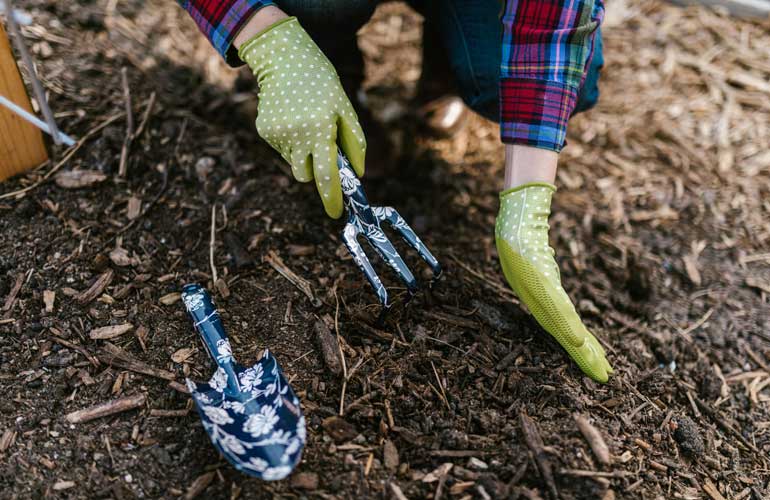
You’ll want to wear gloves when doing this, as this will help prevent exposure to sharp debris or hidden pests. You’ll also want your garden waste bin or other collector nearby. This will allow you to collect the discarded leaves and dispose of them easily. I’d also suggest arming yourself with a small hand rake, which will make the job much easier. A small rake is ideal for precision work around plant roots and garden mulch.
Use a Mulching Lawn Mower for Large Areas
You’ll find that if your leaves cover a large area, you could use a mulching lawn mower. A mulching mower chops leaves into smaller pieces, allowing them to decompose faster.
Set your mower up properly by adjusting the blade height. I’d suggest keeping it high to avoid sucking up mulch. You could also use a grass catcher. This will prevent excessive organic material from building up in your garden beds.
The use of a mulching mower will result in the shredded leaves, providing essential plant nutrients and enhanced soil health.
How to Handle Large Amounts
If you have a significant amount of leaves accumulating in your garden, you might want to look into some of these options.
Hire some help if managing your garden becomes overwhelming. Professional gardeners can clear leaves efficiently.
You might also want to spend some money and invest in some outdoor power equipment, like a leaf vacuum, blower or a mulching mower. These tools can speed up the clearing process.
You could also use something like cargo nets, as these will collect and transport leaves efficiently.
Once you have collected all your leaves, you can choose to turn them into compost. By adding them to a compost pile or compost heap you will reduce the amount of waste while improving soil quality.
Seasonal Strategies for Leaf Removal
Early Autumn Prep
I’d suggest starting by trimming the surrounding trees. You’ll find that reducing the number of falls will help to minimise the leaf clear-up. You can also use outdoor misting systems, which will keep your dry leaves from scattering too much. You can use things like suction cup hooks to secure barriers to catch falling leaves.
Winter Months
I’d suggest leaving some shredded leaves as mulch, as this will help to insulate plant roots and will also prevent erosion. You’ll want to keep a close eye on wet leaves, as these are the ones that will cause mould and disease in your mulch beds. You’ll also want to make sure that your beds are draining properly. You can use drain fittings and floor adjustments to manage excess moisture.
Environmental Benefits of Leaves in Mulch
Instead of discarding leaves entirely, you might want to consider using them, as they have their pluses.
You’ll find that leaves contribute to creating great soil by breaking down into rich organic material. Decomposed leaves release good nutrients into the soil, which will support plant growth.
It’s also a good idea to let some leaves remain, as some leaves provide shelter for beneficial insects and wildlife.
How to Get Leaves Out of Rubber Mulch
Rubber mulch is becoming much more of a popular choice for landscaping, playgrounds, and gardens due to its durability, low maintenance, and ability to suppress weed growth. However, during the autumn, leaves can accumulate on rubber mulch, creating a messy appearance. Excess leaves will also affect drainage.
It can be quite tricky to get rid of leaves from rubber mulch as traditional raking and blowing methods might scatter the mulch. So let’s go through some of the best ways to efficiently remove leaves while preserving the integrity of your rubber mulch.
Why Removing Leaves from Rubber Mulch is Important
Fallen leaves can make your garden or play area look untidy so it’s a good idea to try and keep on top of leaf fall during autumn.
Wet leaves can retain moisture and promote fungal growth, which can lead to mould and mildew in your beds and other areas. You’ll also find that organic matter trapped in rubber mulch can create unpleasant smells over time.
An excess of leaves, especially wet ones, will make playgrounds and walkways slippery, so it’s best to keep these as clear as possible.
Best Methods for Removing Leaves from Rubber Mulch
Using a Leaf Blower with Adjustable Settings
You’ll find that a leaf blower is one of the most effective tools for removing dry leaves from rubber mulch without displacing the mulch itself. When leaf blowing rubber mulched areas, you’ll want to use a low or medium setting on your leaf blower. Any higher and you may find that your lead blower may blow away your rubber mulch alongside the leaves. Accessories like fuel nozzles and tapered attachments will direct the airflow more precisely.
You’ll find it easier to work in sections and to blow leaves in one direction. This will make the leaf collection at the end much easier. I would suggest directing the leaves toward an area where they can be easily collected, such as a lawn or driveway.
Using a Leaf Vacuum with a Bagging Attachment
A leaf vacuum is another fantastic way to remove excess leaves from your rubber mulch. This will also stop you from losing too much of your mulch via displacement. Here are some of my top tips on how to use a leaf vacuum to remove leaves from rubber mulch.
I’d suggest adjusting the suction power to something like the lowest setting. That way, you’ll be lifting the leaves but not your mulch. If you refer to your leaf vacuum’s manual, it may tell you exactly what setting and what attachments to use for rubber mulch – quite often, vacuums come with different accessories to handle different surfaces.
After you have completed an initial clearing, I’d suggest going back over the area again to remove anything left behind.
Light Raking with a Plastic Rake
You may find that a traditional rake might not work on rubber mulch, so you can try a lightweight plastic rake. You can try using a fan rake or soft-tined rake. These will help lift leaves without moving rubber mulch.
You’ll want to rake in a back-and-forth motion as this will stop too much displacement of your mulch. For any stubborn, wet or compacted leaves, you may find that these will need to be picked up by hand.
Hand Removal in Small Areas
If you have a small area with rubber mulch, I’d suggest manually removing the leaves. You’ll want to wear gloves as this will protect your hands and arms from cuts from sharp debris hidden among the leaves.
You can dispose of the leaves using your garden waste bin or by bagging the excess leaves and taking them to your local recycling centre.
As you are removing the leaves from your mulched areas, you may also find other debris, like twigs, rubbish and anything else that has accumulated. It’s worth removing and recycling anything that shouldn’t be in your beds.
Installing a Barrier or Netting System
Your best bet for large areas of rubber mulching is to prevent leaves from settling into your rubber mulch in the first place. There are a few options for this.
You can use cargo nets or mesh covers placed over the mulch to catch falling leaves. This, alongside low fencing or railings, will help prevent wind-blown leaves from accumulating. You’ll also want to regularly sweep surrounding areas, as this will reduce the chance of leaves blowing into mulch beds.
How to Handle Wet Leaves in Rubber Mulch
You’ll find that wet leaves are more difficult to remove because they tend to stick to rubber mulch. Here’s how to tackle wet leaves and rubber mulch:
You will want to use a leaf blower on a low setting, as a gentle breeze can help lift wet leaves without disturbing the mulch too much. You may also find that sweeping a soft broom in a gentle rhythmic motion can help to dislodge wet leaves. You could also try using your garden hose, but do so sparingly. A light mist can help lift sticky leaves.
If these options fail, you can always let the leaves dry out before removing them. A sunny day can help with this.
Autumn Maintenance
Much like the advice for traditional mulch, you are advised to trim your trees as this will help reduce the leaf fall on to your rubber mulch.
For larger gardens or areas, you could look into setting up outdoor foggers or misting systems. These are effective at keeping dust down and preventing leaves from settling.
It’s also a great idea to check your gutters and drains. You don’t want leaves to clog up your pipework.
Winter Months Considerations
If icy or snowy weather is on the way, you might want to clear fallen leaves before it arrives as wet leaves mixed with snow can be even harder to remove.
After it has frozen or snowed, you might want to use a light rake to help remove debris once the mulch bed has thawed. At this point, you may want to have a look at where your rubber mulch is and if it needs repositioning. Often, snow, wintery weather or ice can displace mulch.
Recycling: Turning Waste into Use
Instead of simply getting rid of your excess leaves you might want to use them in your garden instead. You could add them to your composter. Deposing leaves in a compost pile and then using them in your garden can add lots of lovely nutrients to your garden.
Did you know that shredded leaves make excellent mulch for flower beds and vegetable gardens? So don’t waste your precious leaves. Use them to add nutrients to your flower beds. If you want to manage leaf fall in your garden, there are a lot of ways to do this effectively. I hope this post has helped give you some ideas on how you can remove leaves from your mulch. I’d love to hear if you have any other tips you can share.


